 Old Whistle
Scots Wha Hae
Tin whistle notes · slow air in D major
Also called Hey Tuttie Tatie, Bruce’s Address.
Burns wrote his verses on Bannockburn in 1793 to the old air Hey Tuttie Tatie, which tradition said was Robert Bruce's march at the battle.
The notes, bar by bar
For a D whistle (the usual one). ’ is the second octave: same fingers, blow a little harder. # is sharp.
Part A
A A A F# A B D’ B B B A B C# D’ E’ F#’ F#’ E’ D’ D’ E’ F#’ D’ B B A A F#’ F#’ F#’ E’ F#’ G’ A’ E’ E’ E’ D’ E’ F#’ G’ A’ F#’ E’ D’ D’ E’ F#’ D’ B B A A
Fingering chart for this tune
Every note Scots Wha Hae uses, low to high. A filled hole is covered; the top three are your left hand, + means blow harder.
How to play it
An air follows a song: take your time, breathe where a singer would, and let the long notes ring. The rhythm is free.
33 of its 53 notes are in the second octave (marked ’): blow a little harder, with the same fingers.
This setting marks 2 cuts. Learn it plain first, then add them; the app plays both ways.
At a glance
- Kind
- Slow air
- Key
- D major
- Time
- 2/4
- Shape
- 16 bars as written
- Range
- F# to A’ (both octaves)
- Level
- 4 of 10, middling
- Tempo
- 40 to 66 beats a minute in the app
Sheet music
The sheet music appears here.
Where it comes from
Setting: Traditional Scottish melody, public domain.
In the app it belongs to Suantraí, the strain of sleep: early Irish tradition asked every harper to master the three strains of sorrow, joy and sleep.
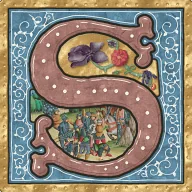
The initial: Bruces army at Bannockburn. Painted after J. Paul Getty Museum, Ms. Ludwig XIII 7, fol. 106.
Tunes like Scots Wha Hae
- The Dawning of the Day slow air in D
- Kitty of Coleraine slow air in D
- The Snowy-breasted Pearl slow air in G
- The Minstrel Boy slow air in G
- Comin’ Thro’ the Rye slow air in G
- The Walls of Liscarroll jig in D
- The Liverpool Hornpipe hornpipe in D