 Old Whistle
Behind the Haystack
Tin whistle notes · jig in G major
A G jig in three parts; it climbs high into the second octave.
The notes, bar by bar
For a D whistle (the usual one). ’ is the second octave: same fingers, blow a little harder. # is sharp.
Part A
D’ E’ F#’ E’ E’ D’ B D’ E’ F#’ G’ F#’ E’ D’ B A A B A D’ B A A B D’ E’ F#’ E’ E’ D’ B D’ E’ F#’ G’ F#’ E’ D’ B G G A G D’ B G G
Part B
D’ G’ B’ G’ F#’ A’ F#’ E’ G’ E’ D’ B G D’ B A A B A D’ B A A B D’ G’ B’ G’ F#’ A’ F#’ E’ G’ E’ D’ B G D’ B G G A G D’ B G G
Part C
D’ G’ A’ B’ G’ E’ G’ A’ B’ G’ E’ D’ B A A B A D’ B A A B D’ G’ A’ B’ G’ E’ G’ A’ B’ G’ E’ D’ B G G A G D’ B G G
Fingering chart for this tune
Every note Behind the Haystack uses, low to high. A filled hole is covered; the top three are your left hand, + means blow harder.
How to play it
A double jig is in 6/8: two groups of three quavers in every bar, lilted "LONG-short-long". Tap your foot twice a bar and let the first note of each three lean a little.
80 of its 137 notes are in the second octave (marked ’): blow a little harder, with the same fingers.
This setting marks 2 cuts, 9 taps. Learn it plain first, then add them; the app plays both ways.
At a glance
- Kind
- Jig
- Key
- G major
- Time
- 6/8
- Shape
- 3 parts, 27 bars as written
- Range
- G to B’ (both octaves)
- Level
- 5 of 10, middling
- Tempo
- 60 to 118 beats a minute in the app
Sheet music
The sheet music appears here.
Where it comes from
Setting: O'Neill's Music of Ireland (1903), no. 893, p. 166.
In the app it belongs to Geantraí, the strain of joy: early Irish tradition asked every harper to master the three strains of sorrow, joy and sleep.
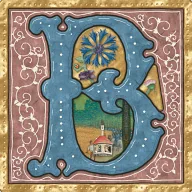
The initial: Behind the haystack. Painted after The J. Paul Getty Museum, Ms. 2, fol. 18v.
Tunes like Behind the Haystack
- The Rakes of Kildare jig in G
- Larry O’Gaff jig in G
- The Cliffs of Moher jig in G
- Apples in Winter jig in E minor
- Jackson’s Morning Brush jig in D
- The Old Maids of Galway reel in G
- The Teetotaller reel in G